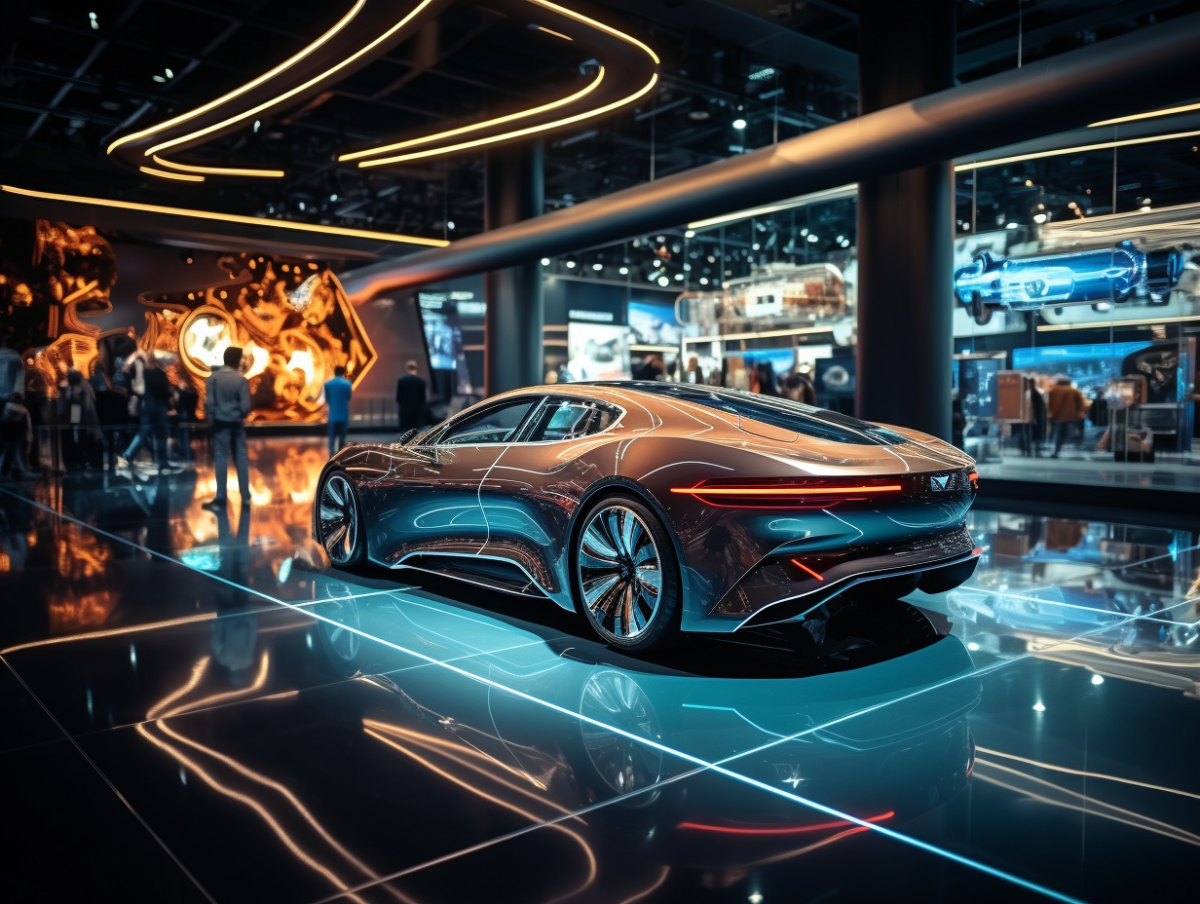
The digital era is reshaping the contours of the automotive market, significantly influencing how vehicles are designed, manufactured, and sold. Digital technologies pave the way for innovations such as in-car connectivity, driver assistance systems, and autonomous vehicles. The buying process itself is undergoing a transformation, with the emergence of online platforms facilitating the selection and acquisition of vehicles. Manufacturers and dealers are adapting to an increasingly informed consumer who demands a personalized and digitally enhanced shopping experience.
Impact of digital on automotive production and innovation
The automotive sector is undergoing a profound digital transformation, redefining production methods and driving innovation. The digitization of the industry revolves around the integration of new technologies, ranging from advanced robotics to big data analytics, to optimize assembly lines and customize offerings. In this dynamic, the connected car becomes a tangible reality, integrating technologies such as GPS and autonomous parking, responding to a nearly constant use of Internet by consumers. These advancements reflect a necessary catch-up for a sector that, paradoxically, has experienced some delays in technology integration.
Iconic brands such as General Motors, Ford, Volkswagen, and Volvo embody this revolution through strategic partnerships with digital players. General Motors is investing in Lyft, aiming to develop innovative mobility services. Ford is partnering with Google to accelerate the development of its autonomous vehicles. Volkswagen has signed a partnership with LG to enhance the user experience of its cabins. Volvo, for its part, collaborates with Microsoft to explore the potential of augmented reality in automotive design. The alliances between traditional manufacturers and tech firms illustrate the quest for competitiveness and relevance in the face of the expectations of an always-connected audience.
In this context, the school life management tool Pronote LEF finds an unexpected application. Performance tracking and predictive maintenance are now inspired by systems similar to those used for tracking educational pathways. The ability to collect and process data in real-time allows for a proactive approach to vehicle management, anticipating maintenance needs before they arise. This approach benefits both manufacturers and users, reducing costs and optimizing the driving experience.
Digital transformation and the evolution of customer experience in the automotive sector
Players in the automotive sector are seizing the opportunity of digital to redefine the customer experience. The rise of collaborative consumption, with platforms such as Blablacar, Drivy, and Ouicar, reflects an evolution in behaviors. Carpooling and peer-to-peer rentals, once marginal, are now established as common practices. These services respond to a demand for more flexibility and savings, while fitting into a broader trend of the sharing economy.
The approach to multichannel marketing is becoming essential, allowing automotive brands to accurately meet the diverse expectations of consumers. Marketing campaigns are personalized and leverage a variety of digital channels, from social media to mobile apps, to engage the customer at every stage of their journey. Rethinking the customer experience through these channels ensures a constant presence and dynamic interaction, key elements for retaining and expanding the customer base in a constantly changing market.
As for the rise of services such as Uber, controversial yet indispensable, they are shaking up the traditional landscape of personal transport. These services are redefining the contours of urban mobility and influencing consumer expectations regarding transportation. The automotive sector, aware of these changes, is adapting by offering solutions that integrate flexibility, connectivity, and an enriched user experience. Digitalization, far from being limited to the production sphere, infuses the entire automotive value chain, fundamentally reshaping the relationship between manufacturers, vehicles, and users.