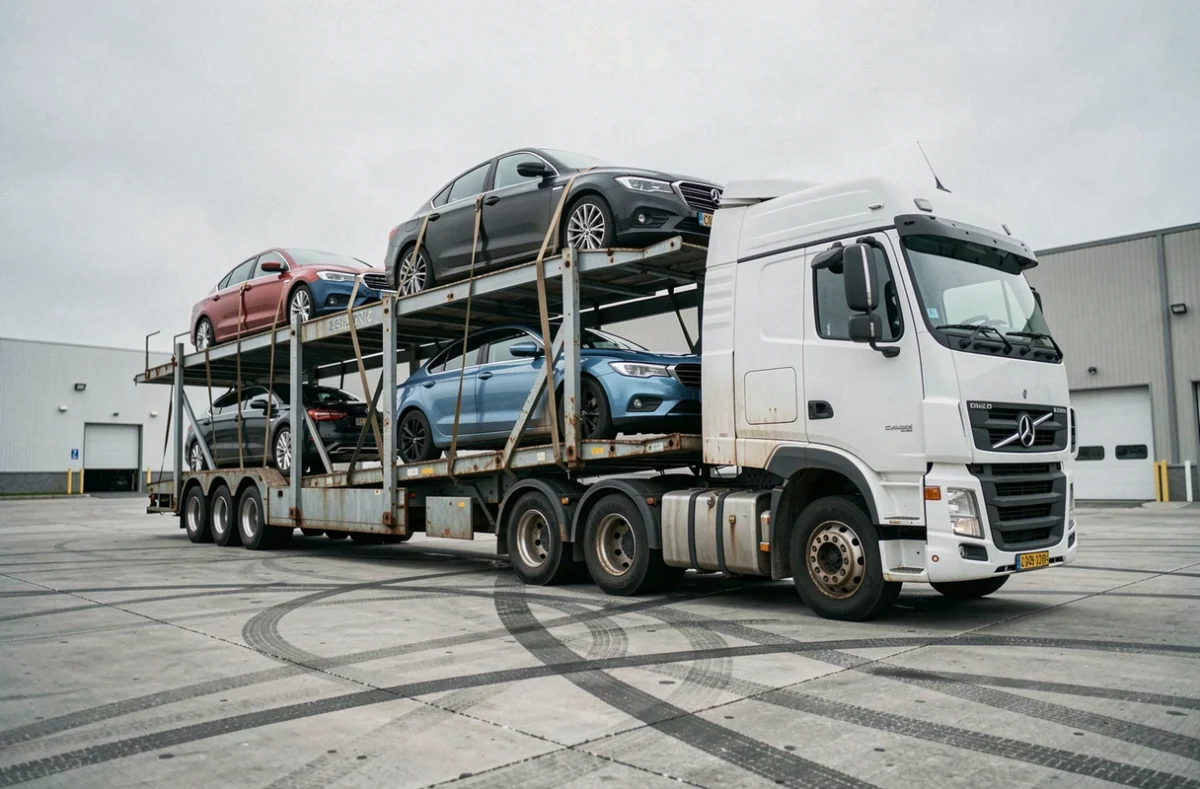
Every year, thousands of vehicles are transported on car carrier trucks between two French regions or across borders. Car transport by truck involves both long-distance purchases and relocations, repatriations after breakdowns, or the transfer of a collectible model. Behind an offer that seems homogeneous, differences in insurance coverage, contractual documentation, and access conditions create tangible disparities among providers.
Transport insurance and declared value: the point that quotes do not detail
Most quote requests focus on the price per kilometer. The actual level of protection for the vehicle during transit often takes a back seat, even though it is the most significant factor in the event of a claim.
The carrier’s liability and the insurance covering the transported vehicle are two distinct guarantees that are often confused. The former may be capped at an amount well below the market value of your car. Request in writing the maximum compensable value, the exclusions applied, and the possibility of subscribing to a higher declared value.
For international transport, the CMR convention provides for a liability cap calculated by weight, not by the value of the vehicle. Without a declared value or special interest as stipulated by this convention, compensation may be far from the actual price of the car. Checking this point before booking avoids costly disputes.
When comparing several offers for car transport by truck, the quote amount is not enough: effective insurance coverage, deductibles, and claims reporting conditions are integral to the choice.

Bill of lading and inventory: documents that protect in case of dispute
The bill of lading is not a secondary administrative formality. This document formalizes the transport contract and accompanies the vehicle from loading to delivery. In case of disagreement over damage, it is the piece that prevails.
Photographing the vehicle at the time of loading from multiple angles (corners of bumpers, rims, roof) and having the existing damages noted in writing on the bill of lading is the minimum. Keep a copy of the document signed by both parties.
Apparent damage and hidden damage
For visible damage upon delivery, reservations must be made immediately, before signing the receipt without mention. Any signature without reservation complicates the subsequent handling of the case.
For non-apparent damage during international transport under the CMR convention, the notification period is seven days, excluding Sundays and public holidays. After this period, the burden of proof becomes much heavier for the sender or recipient.
- Photograph the vehicle at loading and delivery, including the underside if possible
- Request a signed copy of the bill of lading with mention of pre-existing defects
- Note reservations on the delivery receipt before signing, even for a minor scratch
- Keep all written exchanges (emails, SMS) with the carrier for at least one year
Access restrictions and ZFE: a selection criterion rarely anticipated
Low emission zones (ZFE) established in several French metropolitan areas impose traffic restrictions on heavy goods vehicles based on their Crit’Air sticker. An older car carrier truck may not have access to certain loading or delivery areas in city centers.
This parameter has a direct impact on the service offered. A carrier whose fleet of trucks does not comply with the regulations in the destination ZFE may charge an additional fee to subcontract the last portion of the journey or impose a delivery point on the outskirts.
Check the Crit’Air sticker of the planned truck and its compatibility with the ZFE of the arrival city. This question, rarely asked when requesting a quote, can change both the timeline and the final cost of transport.
Physical access to the loading point
Beyond environmental regulations, the width of the street, the presence of street furniture, or the height of an arch limit the maneuvers of a standard car carrier. If loading or delivery takes place in a dense urban area, specify the exact address to the carrier from the first contact. Some providers use a small relay platform to cover the last kilometer, which adds an additional handling of the vehicle.
Groupage or dedicated transport: which mode for which need
Group transport involves loading several vehicles onto the same car carrier truck. The cost per vehicle decreases, but the timelines depend on the truck’s filling and the shared itinerary among several clients.
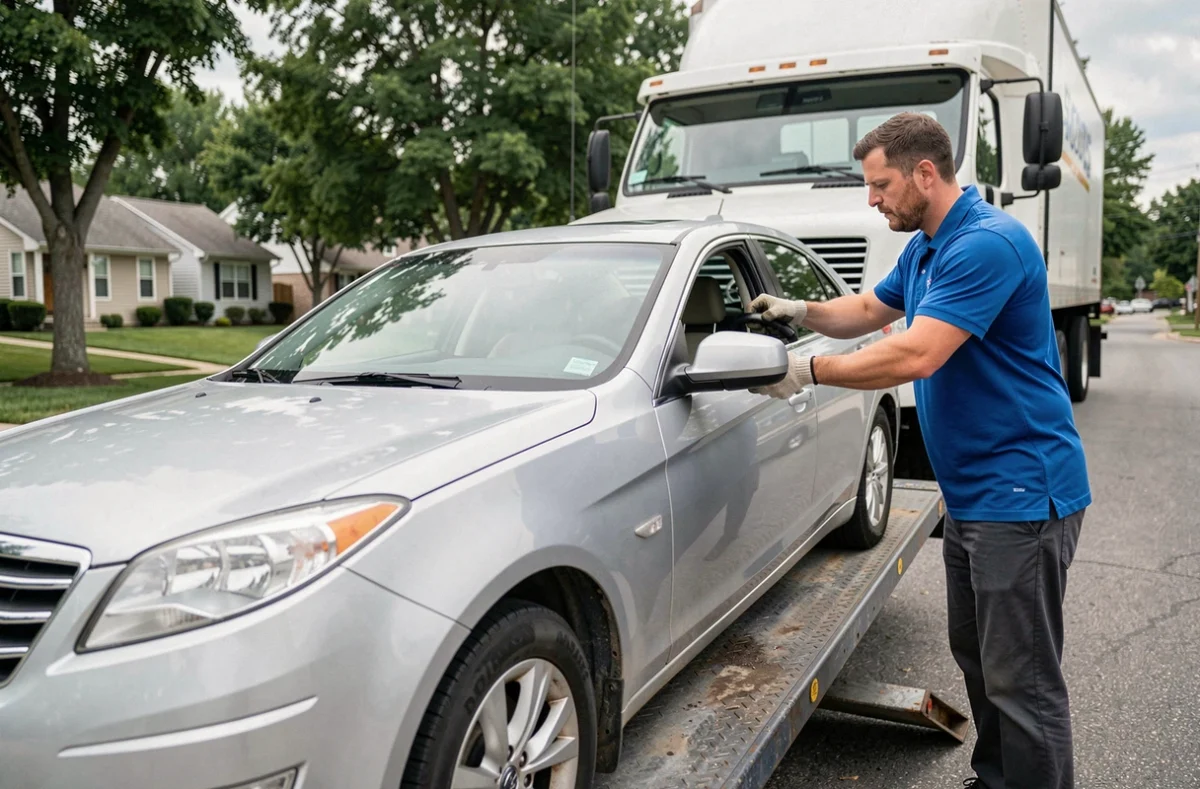
Dedicated transport mobilizes a truck for a single vehicle (or a lot belonging to the same client). The rate is higher, and the pickup and delivery slots are more precise. This option is useful for a high-value vehicle, a tight deadline, or a non-running model requiring specific loading equipment.
- Groupage is suitable for journeys of more than a few hundred kilometers when the schedule remains flexible
- Dedicated transport is necessary when the delivery date is firm or the vehicle requires special protection
- A closed truck protects against splashes and bad weather but represents a significant additional cost compared to an open car carrier
Asking the carrier if they subcontract part of the journey also helps to know who will be responsible in case of damage on each segment. An additional intermediary in the chain complicates the tracking of the case if a claim occurs.
Ultimately, the choice of transport mode relies on three interrelated variables: budget, acceptable timeline, and the level of risk tolerated for the vehicle. None of these three variables can be optimized without compromising the other two. The best decision comes from a careful reading of the carrier’s general conditions, not just from comparing displayed rates.