The color choice for a baby’s room involves much more than just a matter of taste. Behind every shade applied to a wall or every lacquered piece of furniture, technical criteria influence the quality of the air breathed by the infant. Here, we address the points that classic decor guides overlook, intersecting colorful trends and health requirements.
VOC Emissions and Colorful Baby Rooms: What the Label Doesn’t Say Enough
Construction and decoration products sold in France carry an indoor air emission class. For a baby’s room, the lowest emission level on this scale is the benchmark to aim for. We recommend checking this label on every item brought into the room: wall paint, flooring, wallpaper, decorative panels.
A common pitfall concerns colorful furniture made from MDF or particleboard. European regulations on formaldehyde emissions will tighten in the coming years. This provides an objective criterion for comparing finishes beyond mere appearance. A solid wood bed stained with water does not emit the same compounds as a piece of furniture covered with a bright melamine film.
To achieve a room that is both colorful and healthy, it is essential to select low-VOC paints and then ventilate the room for several weeks before the baby’s arrival. The catalogs available on bebecolor.com allow filtering by type of finish, simplifying product comparisons.
Trendy Color Palettes: Lilac, Almond Green, and Earth Tones
Lilac remains the standout shade extended since 2023. Its combination with beige browns creates a balance between softness and warmth, particularly suitable for north-facing rooms that lack natural light.
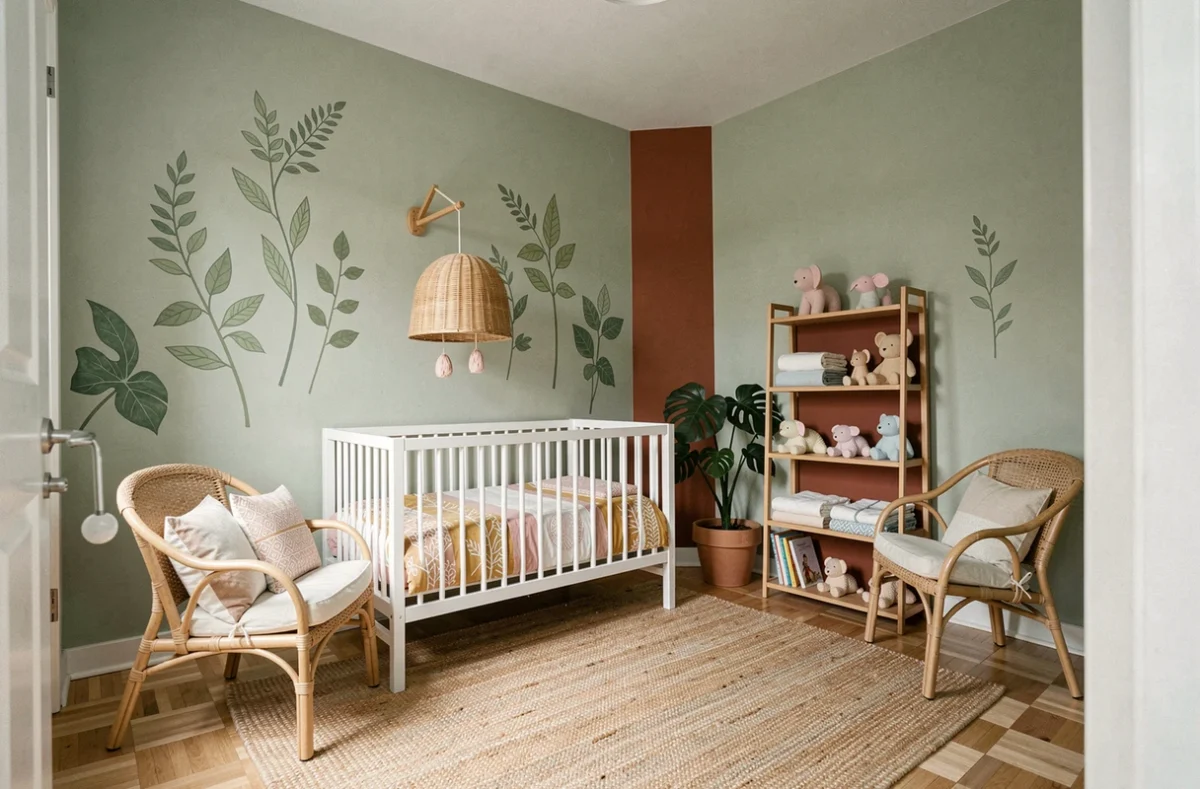
Almond green is emerging as an alternative to sage green, which is considered too gray for an infant’s space. Almond green works well as a flat color on an accent wall, combined with light wood furniture and textures in linen or ecru cotton. It holds up well under warm lighting without turning khaki.
Accent Colors and Color Dosage
The trend is no longer for a total monochrome look. We observe a more targeted use of bright color, reserved for specific elements: a small storage unit, bed linens, a hand-painted wall frieze. The rest of the space retains neutral tones to avoid visual overload.
- Terracotta as an accent on one or two accessories (cushion, pendant), never as a flat wall color in a small volume
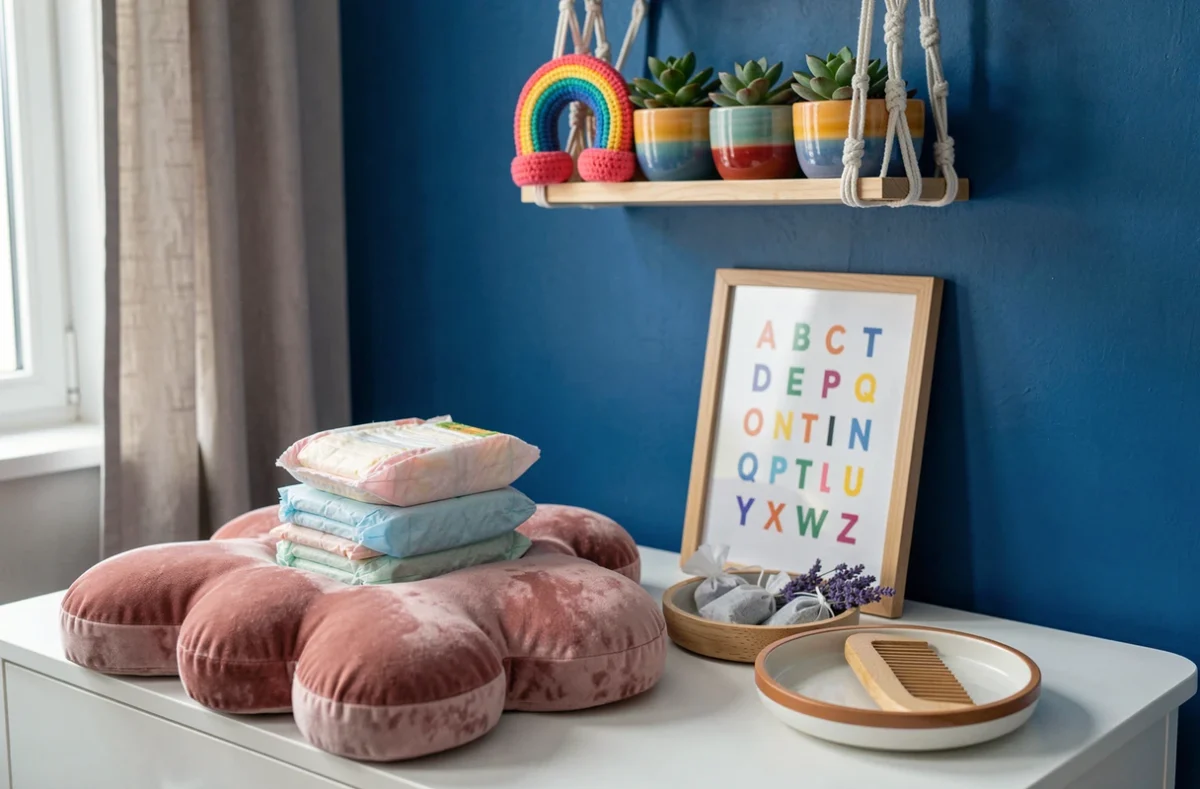
- Slate blue limited to low furniture (dresser, shelf) to visually anchor the room without darkening it
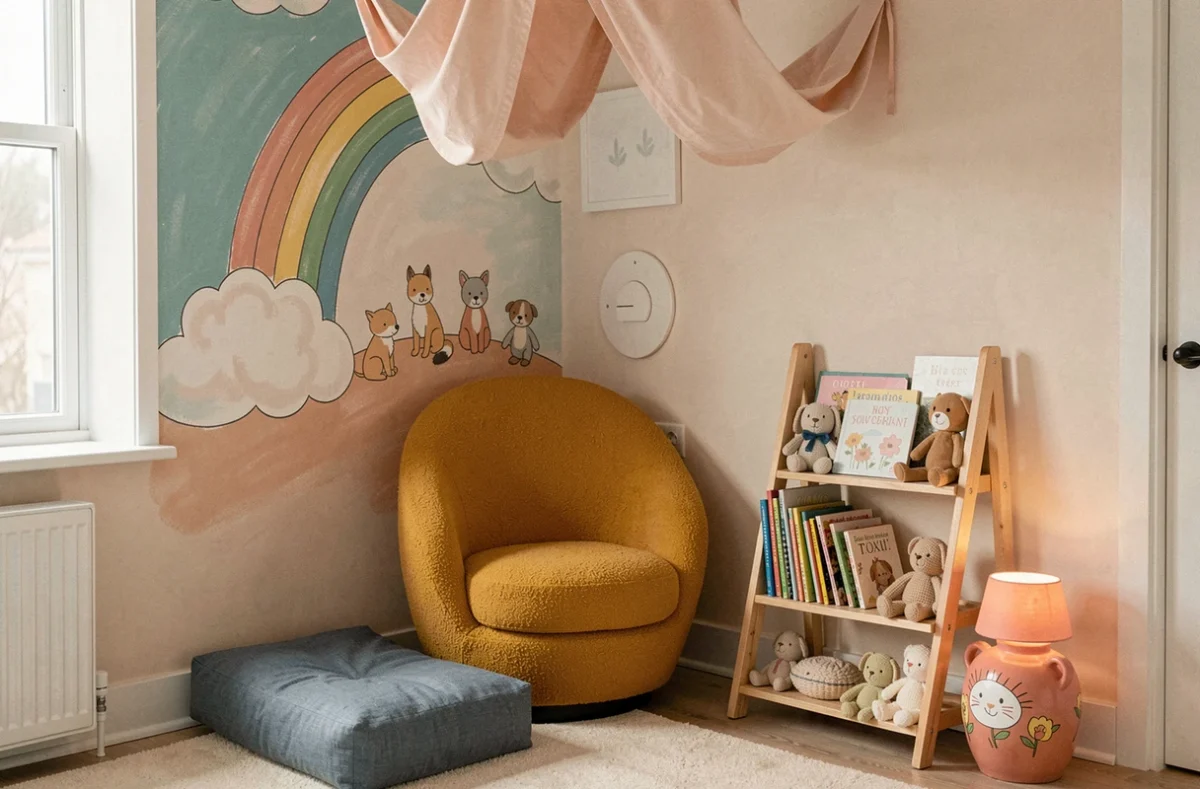
- Mustard yellow used in textile details, effective for stimulating the infant’s gaze without being aggressive
The principle remains the same: one dominant neutral color, one soft secondary color, a bright accent limited to a few objects.
Cabin Beds, Tipi Beds, and Regulatory Safety in Children’s Rooms
Cabin beds and tipi beds are not just decorative elements. European regulations regarding the general safety of products apply to childcare items related to sleep. Manufacturers must consider risks of falls, entrapment, ingestion of small parts, and chemical exposure.
A cabin bed painted in a bright shade can accumulate two sources of risk: the structure itself (spaced bars, edges) and the finish (non-compliant paint). Checking CE compliance and the emission class of the coating is a necessary double-check.
Second-Hand Furniture and Technical Checks
Buying second-hand is common for baby room furniture. A vintage bed or dresser adds character to the decor but requires specific inspection rarely included in decor guides.
- Check the spacing of the bars on an old bed (standards have evolved, some models have dangerous gaps)
- Check for paint chipping, especially on furniture made before lead restrictions
- Ensure that hardware (screws, hinges) is complete and not corroded, particularly on dressers with drawers accessible to a standing child
- Test anti-tip stability by securing the furniture to the wall if necessary
Textures and Natural Materials to Decorate Without Polluting
Solid wood (beech, pine, birch) remains the reference material for baby room furniture. Its finish is as important as the wood type: a natural hard oil or water-based varnish preserves the wood’s aesthetics while limiting emissions.
Rattan and wicker are making a strong comeback in small furniture (storage baskets, nursing chairs, light fixtures). These materials do not emit VOCs and provide a warm texture that complements pastel or terracotta palettes well.
Non-woven wallpaper, provided you choose a model printed with water-based ink and rated A+, allows for the introduction of patterns (animals, geometric shapes, stylized plants) on a single wall. This duo of wallpaper and paint on adjacent walls adds depth to the space without overwhelming the eye.
Textiles and Bedding
Certified organic cotton Oeko-Tex remains the reference for bedding in direct contact with the infant. Mass-dyed tones (color integrated into the fiber) hold up better in washing than surface prints, maintaining decorative consistency over time.
One last often-overlooked point: the style of a colorful baby room ages quickly if the color relies solely on wall paint. Investing in removable elements (textiles, small furniture, frames) to carry the color allows for the palette to evolve over the months without repainting the walls. Colors carried by textiles and small furniture adapt to each stage of growth.