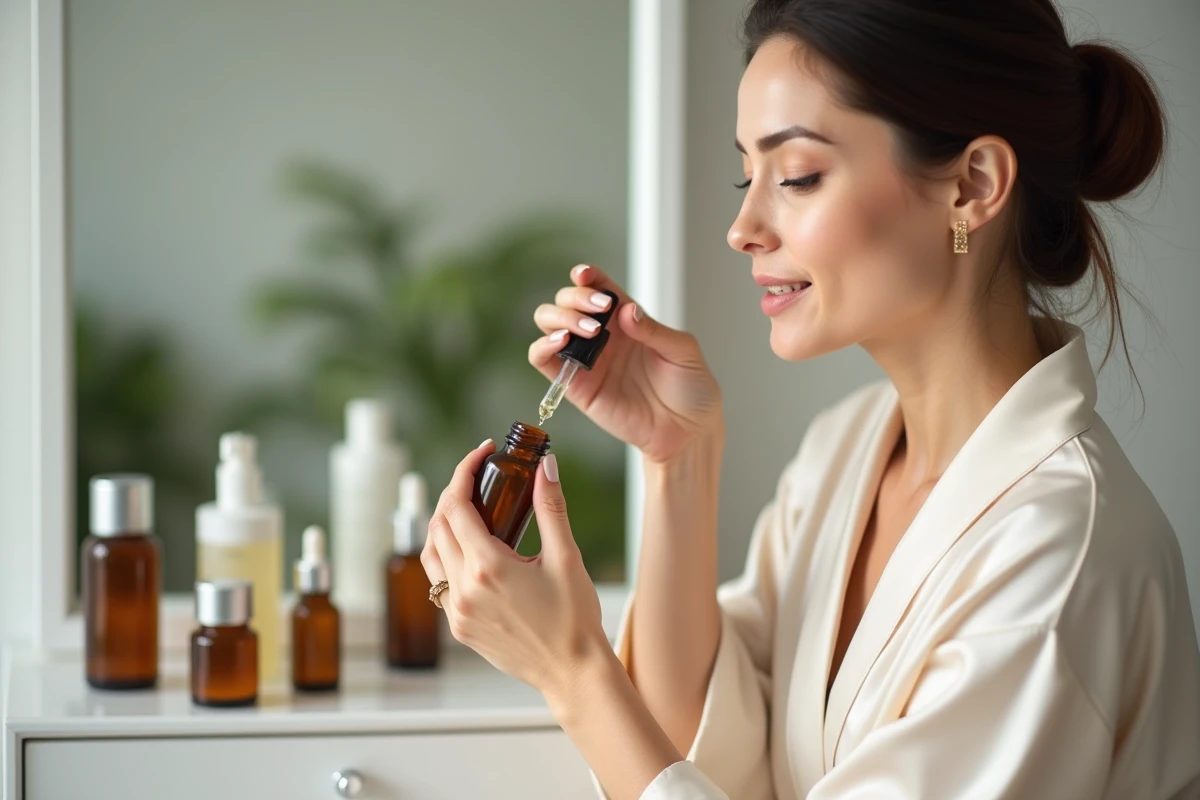
Beauty and skincare trends evolve quickly, but not all are equally valuable in everyday life. With the rise of skinimalism, new regulatory constraints on sunscreen filters, and the growth of routines aligned with hormonal cycles, the question is no longer what to buy, but what to keep. This article compares the dominant approaches of 2026 to identify those that truly change the effectiveness of a beauty routine.
Skinimalism, Ayurvedic skincare, and portable LED patches: three beauty routine approaches compared
Three currents structure beauty routines in 2026. Each is based on a different logic: reducing the number of products, personalizing according to individual constitution, or using a targeted technological device.
| Approach | Number of products/actions | Personalization | Main audience | Constraint |
|---|---|---|---|---|
| Skinimalism | 2 to 3 multifunctional products | Low (universal routine) | All skin types | Finding truly versatile formulas |
| Ayurvedic skincare (doshas) | 3 to 5 products according to dosha | High (individual profile) | Reactive skin, seeking naturalness | Correctly identifying one’s dosha |
| Portable LED patches | 1 device + topical treatment | Medium (choice of wavelength) | 30-45 years, polluted urban areas | Initial cost, regular use |
The WGSN Beauty Trends Forecast Q1 2026 confirms the rise of skinimalism since early 2026, with ultra-simplified routines of 2-3 multifunctional products. The goal: to counter skincare overload that pushed people to layer serums, essences, and creams without clear logic.
Ayurvedic-inspired skincare, on the other hand, has surpassed Korean trends in terms of Google Trends searches in Western Europe since the first quarter of 2026, according to the Google Trends Beauty Report Europe. Its strength lies in personalization according to doshas, which contrasts with the universal approach of skinimalism.
Portable at-home LED patches represent the third path. A clinical study published in the Journal of Cosmetic Dermatology (volume 45, issue 2, April 2026) reports increased satisfaction among 30-45 year-olds in polluted urban areas for anti-aging. The combination of a targeted treatment with LED light reduces the number of products needed while providing a technological dimension that the other two approaches do not offer.
A broader overview of new skincare and makeup products is regularly updated on the Mes Secrets de Beauté website, allowing you to follow these developments without multiplying sources.
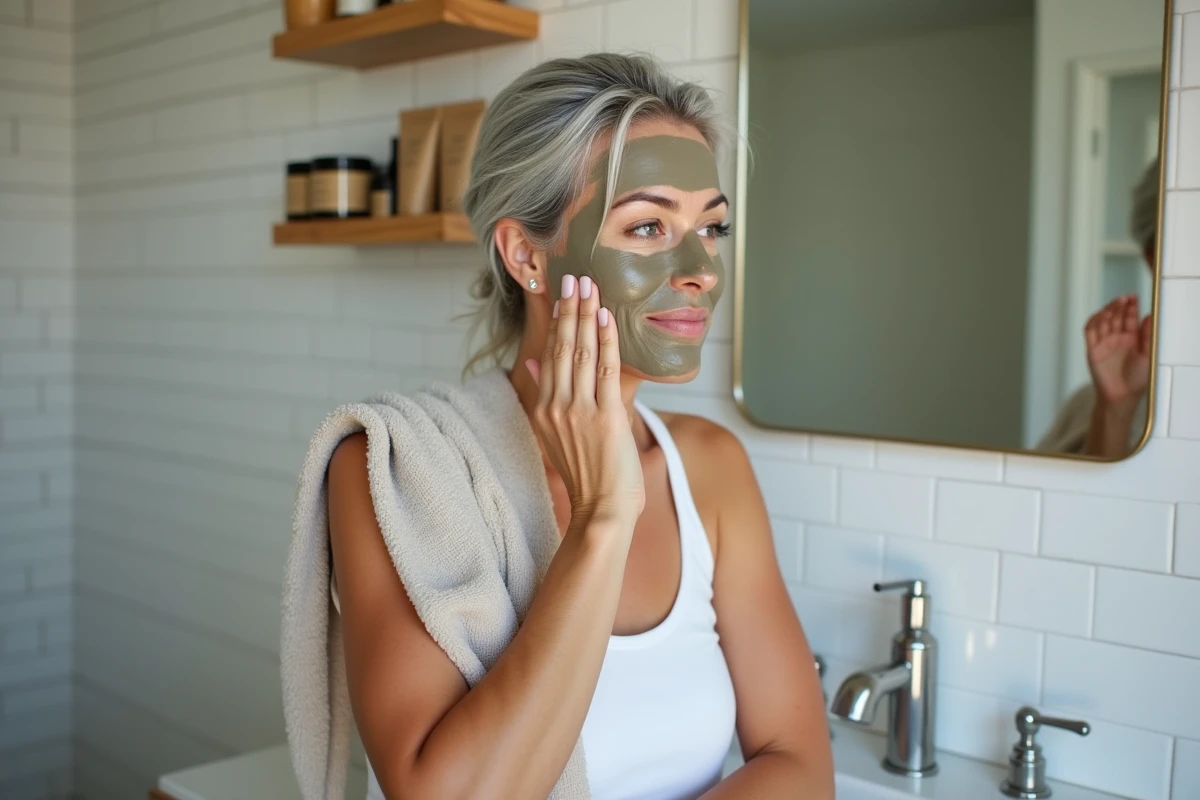
Beauty routine and hormonal cycles: adapting your care without multiplying products
Adapting your beauty routine to women’s hormonal cycles allows you to maximize the effectiveness of active ingredients without adding products. The principle is based on variations in sebum production, hydration, and skin sensitivity that occur throughout the cycle.
Follicular phase and ovulation: focusing on radiance
During the first half of the cycle, the skin produces less sebum and better tolerates gentle exfoliating actives. This is the ideal window for a radiance treatment or a vitamin C serum, if the routine already includes one.
Around ovulation, the skin naturally shows a finer texture. No need to overload: a lightweight moisturizer and sunscreen are sufficient. Skinimalism makes perfect sense here.
Luteal phase and menstruation: calming and protecting
The second half of the cycle is often accompanied by increased sebum production and heightened sensitivity. This is the time to prioritize soothing textures and avoid aggressive exfoliants.
- Replace the radiance serum with a soothing treatment (such as centella asiatica or an Ayurvedic formula suited to the dosha) to reduce redness and micro-inflammations.
- Maintain the same sunscreen, as UV needs do not vary with the hormonal cycle.
- If an LED patch is used for anti-aging, prioritize soothing wavelengths (red) rather than stimulating ones during this phase.
This approach does not require buying more: it reorganizes the use of existing products according to the time of the cycle. Two to three versatile formulas cover all needs if used at the right time.
Sunscreen and European regulation: what changes for your daily routine
Regulation (EU) 2026/452 of the European Commission, adopted on March 10, 2026, commits to the gradual ban of controversial nanoparticles in sunscreens. This regulatory constraint pushes brands towards more transparent mineral alternatives regarding composition.
For a daily beauty routine, this translates into reformulating the most common SPF products. Next-generation mineral filters leave fewer white marks than before, which removes one of the main barriers to adopting daily facial sun protection.
However, the textures remain slightly thicker than those of the old chemical filters with nanoparticles. On skin in the luteal phase, already prone to excess sebum, the choice of SPF texture deserves particular attention. Non-comedogenic fluid formulas are better suited than rich creams during this period.
Ayurvedic skincare and doshas: a personalization that surpasses the Korean trend
The Google Trends Beauty Report Europe, updated as of May 1, 2026, shows that searches for Ayurvedic skincare surpass those related to K-beauty in Western Europe since the first quarter of 2026. The reason: personalization according to doshas (Vata, Pitta, Kapha) offers a framework for product selection that Korean skincare, more focused on star ingredients, does not provide.
A Pitta profile, for example, will steer its routine towards refreshing and anti-redness formulas. A Vata profile will prefer nourishing textures to combat dryness. This framework aligns well with the hormonal cycle approach: the dosha defines the base of the routine, while the hormonal cycle modulates its intensity.
- Vata Dosha: prioritize rich plant oils and balms during the luteal phase, when dryness intensifies.
- Pitta Dosha: opt for soothing plant-based serums (centella, aloe vera) throughout the cycle, reducing stimulating actives in the second half.
- Kapha Dosha: lighten the routine with gels and light lotions, incorporating a gentle exfoliant only in the follicular phase.
This combination of dosha and hormonal cycle allows for a routine of three or four products without sacrificing personalization. Skinimalism finds its limit here: reducing the number of products only makes sense if each product is chosen precisely, not by default.
The beauty trend of 2026 is not just about a star ingredient or an additional gadget. The most telling data remains that from the Google Trends Beauty Report Europe: personalization according to individual profile takes precedence over the single-ingredient approach. The most effective routines combine few products, a clear selection framework (dosha, hormonal cycle), and sunscreen compliant with the new European standards.