The oblique muscles are involved in trunk rotation, lateral flexion and pelvic stabilization. Training them is about more than simply piling on abdominal exercises: the type of stress placed on the trunk (rotation, lateral flexion or resistance to these movements) determines what the obliques actually do during each set. What limits the set first—whether it’s the trunk, shoulder or hip—also affects how effective the exercise really is.
Rotational, lateral-flexion or anti-movement stress: three types of oblique exercises to distinguish
Grouping all oblique exercises into a single category overlooks the mechanics that set them apart. A Russian twist involves active trunk rotation. A side plank requires you to resist lateral flexion. A Pallof press trains resistance to rotation. These three types of stress are not interchangeable and do not prepare the body for the same situations.
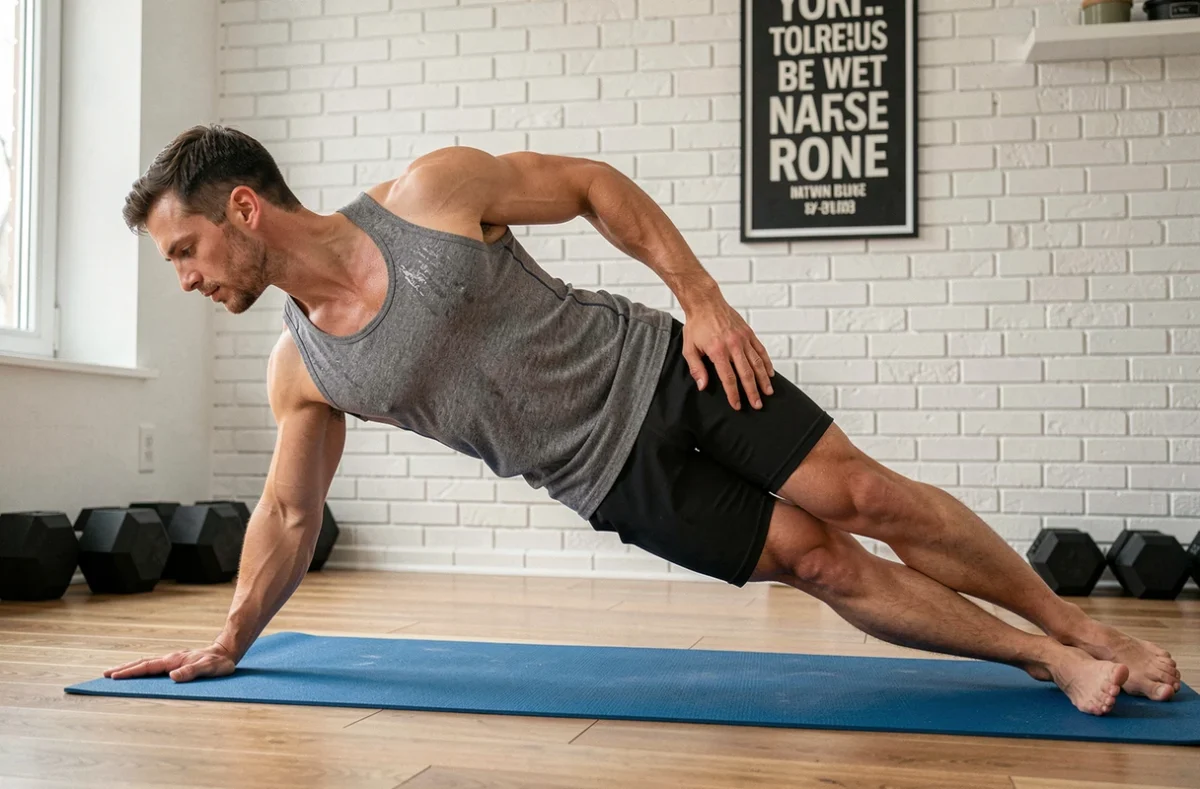
The side plank primarily trains resistance to lateral flexion. The Pallof press targets resistance to rotation. Treating them as equivalent obscures their distinct training goals: stabilizing the trunk against a force pushing it sideways is not the same as stabilizing it against a force that makes it rotate.
A well-rounded oblique program should include at least one movement from each category. Someone who only does side planks trains anti-lateral flexion but neglects the trunk’s ability to produce or control rotation, limiting the carryover to sports movements and everyday activities.
To develop the oblique muscles in a balanced way, choose exercises based on the type of stress you want to train—not just on how much of a burn you feel during the set.
What limits the set: the trunk, shoulder or hip
An exercise intended to target the obliques loses some of its value if another muscle group gives out first. The side plank illustrates this well: measurements reported in the context of rehabilitation exercises show that it engages not only the obliques but also the gluteus medius and shoulder muscles. Shoulder fatigue can limit how long you hold the position before the trunk is truly the limiting factor.
This has practical implications when choosing variations:
- If your shoulder tires before your obliques during a side plank, switch to a forearm variation or shorten the holds in favor of more frequent, shorter sets to shift the stress back to the trunk.
- If your hip lacks the strength to maintain alignment, the gluteus medius becomes the weak link, turning the side plank into more of a hip exercise than an oblique exercise.
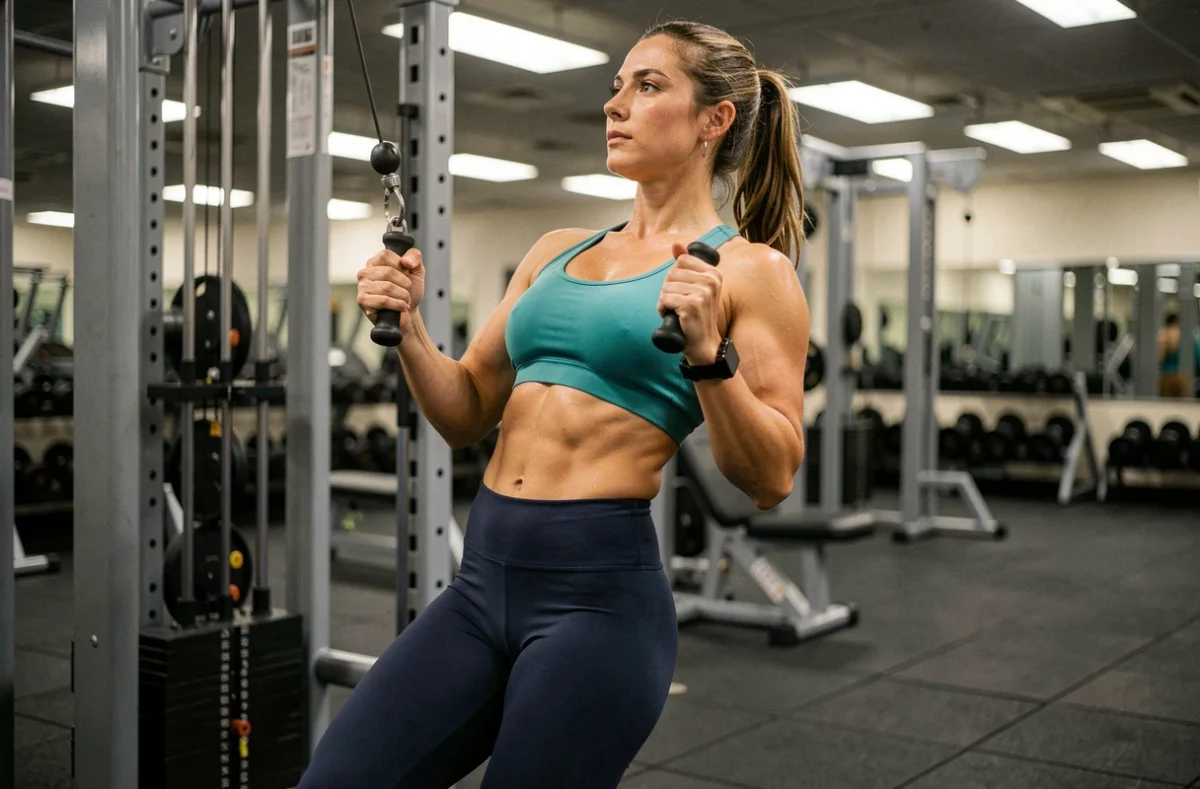
- An exercise such as the standing cable Pallof press removes the shoulder and hip demands: the trunk remains the only limiting factor, making it a more targeted choice for resistance to rotation.
Before adding difficulty or volume, identify what gives out first in each exercise so you can adjust your program accordingly. A movement in which the obliques are never the limiting factor will not develop them effectively, regardless of the muscle activation measured during the effort.
Muscle activation and oblique hypertrophy: a common misconception
Exercise rankings based on electromyographic (EMG) activity are widely circulated in training guides. An exercise that produces high EMG activation in the obliques is often presented as the best one for building them. This interpretation is misleading.
EMG studies measure electrical activity during exercise, not muscle growth after several weeks of training. A movement can produce intense activation without triggering hypertrophy if training volume, progressive loading and frequency are insufficient.
In practice, an exercise ranked first for EMG activation will not necessarily build the most oblique muscle mass over the long term. Hypertrophy depends on the mechanical tension accumulated over multiple sessions, the ability to increase the load or difficulty, and the actual time the target muscle spends under tension.
Side plank variations: difficulty changes muscle recruitment
Comparisons between variations show that the side plank performed on the feet engages the external oblique more than the knee-supported version. The knee-supported version is a useful regression for beginners or during rehabilitation, but it is not equally challenging.
This point is often overlooked in programs that offer progressions. Moving from the knee-supported version to the feet-supported version is not just a minor comfort adjustment: it significantly changes the muscular demand on the obliques. These measurements indicate immediate activation rather than long-term gains, but they confirm that not all variations of the same exercise are equally effective.
Build an oblique workout around the type of stress and limiting factor
Rather than choosing exercises at random, use two criteria to build a well-structured program: the type of stress (active rotation, anti-rotation, active lateral flexion or anti-lateral flexion) and the limiting factor for each movement (trunk, shoulder or hip).
- For anti-lateral flexion with the trunk as the limiting factor: side planks on the feet, using short sets if your shoulder tires too quickly.
- For anti-rotation with the trunk as the limiting factor: standing Pallof presses, gradually increasing the resistance of the cable or band.
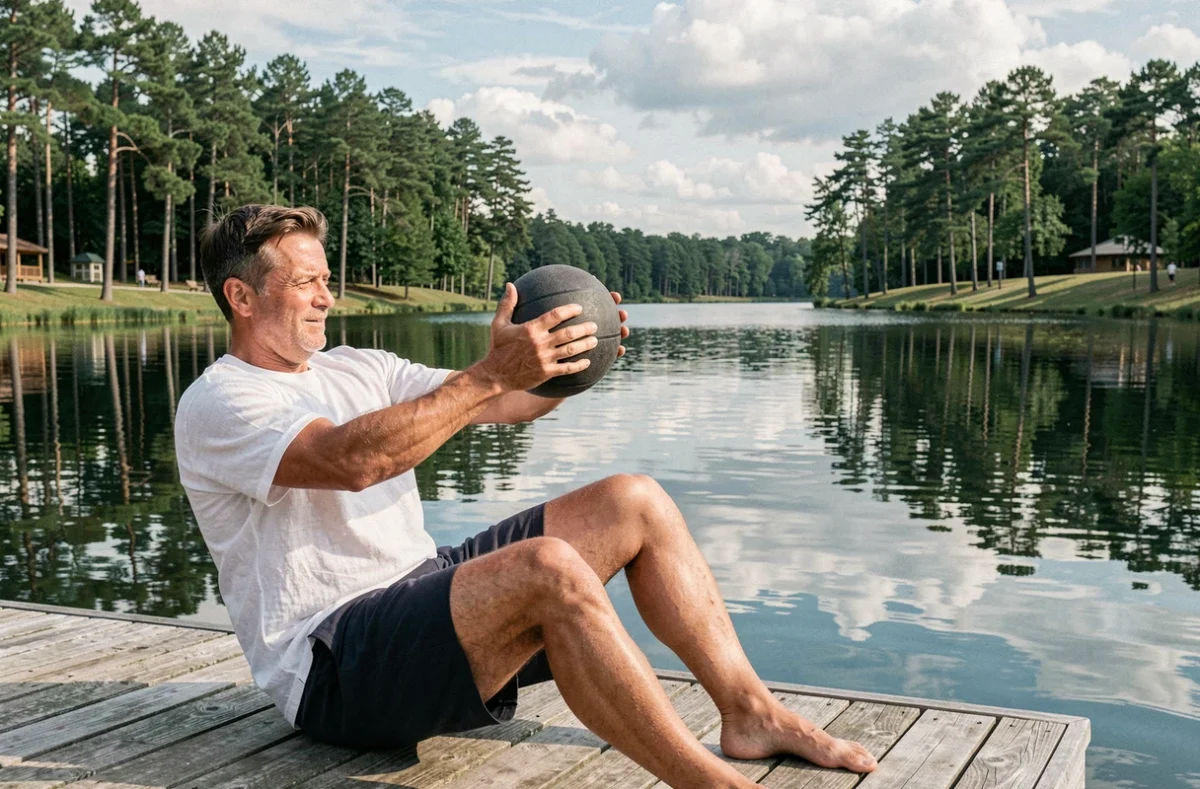
- For active rotation: weighted Russian twists or cable woodchops, controlling the eccentric phase to increase the obliques’ time under tension.
- For active lateral flexion against resistance: dumbbell side bends, making sure the movement comes from the trunk rather than the hip.
A program that covers at least two types of stress with exercises that keep the obliques as the primary muscles being challenged will produce more complete results than simply accumulating variations of a single movement. You can then adjust the load, number of sets and weekly frequency based on your level and recovery capacity.
The most underestimated progression is also the simplest: increase the difficulty of the variation before increasing the volume. Moving from a knee-supported side plank to one performed on the feet, or from a light Pallof press to greater resistance, provides a more targeted stimulus than simply adding sets to a movement that has become too easy.