
The dematerialization of documents is no longer just about scanning paper archives. Since the announcement of the schedule for the generalization of electronic invoicing between 2026 and 2027 for VAT-registered companies, the topic has shifted from an optimization project to a compliance obligation. Understanding the benefits and limitations of this transition requires looking beyond the usual promises of time and space savings.
Probative value and electronic archiving: the often-overlooked technical foundation
A dematerialized document only has legal value if its integrity, traceability, and timestamp are guaranteed. We still observe too many projects where digitization stops at a PDF file stored on a shared server, without any layer of probative archiving.
Probative archiving relies on digital safes compliant with current standards, capable of certifying that a document has not been altered after its deposit. Without this system, a dematerialized invoice or contract can be contested in the event of a dispute.
The choice of the archiving system also determines the legal retention period. A payslip must remain accessible and readable for several decades. A simple hard drive or a public cloud service does not meet this requirement. The question to ask any document management software (GED) publisher is precise: what mechanism guarantees the longevity of the format and integrity over the legal retention period?
Before assessing the advantages and disadvantages of dematerialization for your organization, we recommend mapping the documents subject to a long retention obligation and verifying that the proposed solution natively integrates probative archiving.
Mandatory electronic invoicing: what the 2026-2027 schedule changes concretely
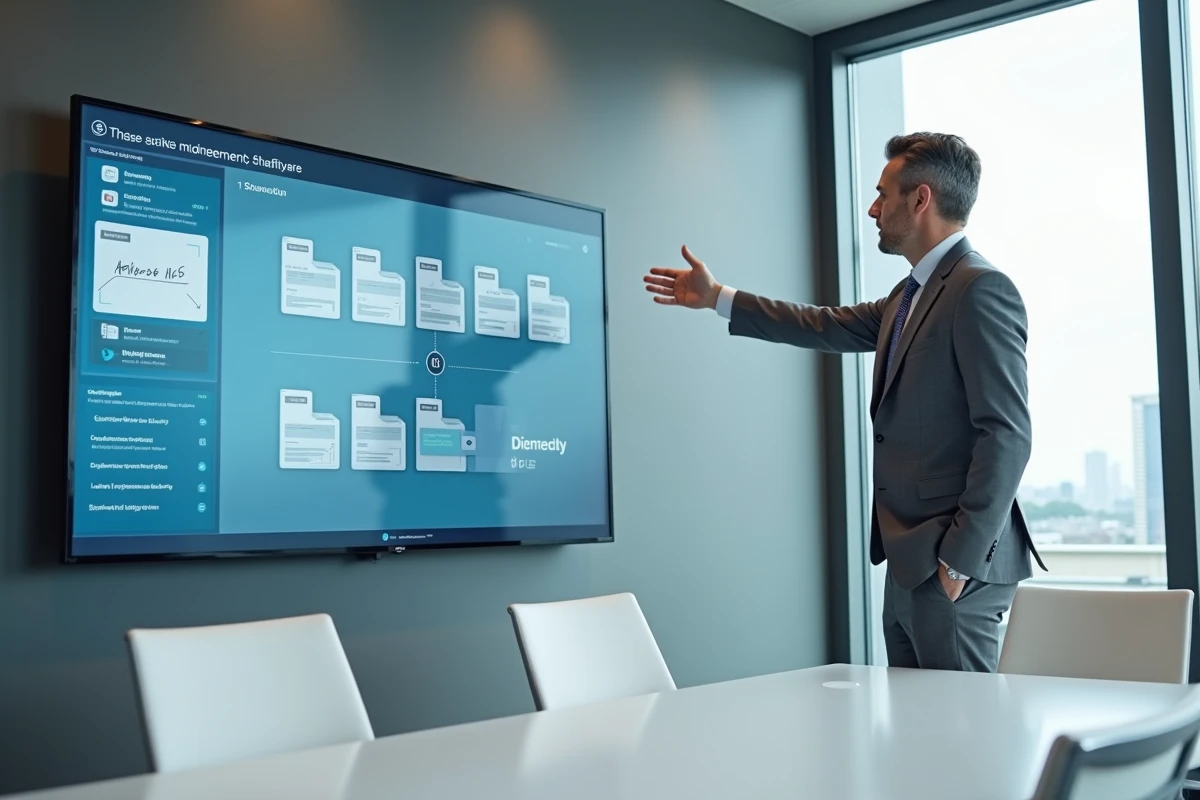
The electronic invoicing reform requires VAT-registered companies to send and receive their invoices via partner dematerialization platforms or the public portal. The issue is no longer whether to dematerialize, but how to comply.
This framework changes the very nature of the project. It is not simply about generating a PDF: invoices must comply with a structured format, readable by the tax administration’s systems. Invoicing data circulates in an interoperable ecosystem, which requires technical integration between your invoicing tool, your GED, and the chosen dematerialization platform.
Companies still using spreadsheets or outdated accounting software face an adaptation challenge. We recommend checking three points before any migration:
- The compatibility of the accounting software with the structured formats required by the reform (Factur-X, UBL, or CII)
- The ability of the GED solution to automatically receive incoming invoices from the public portal or a partner platform
- The level of traceability offered throughout the lifecycle of each invoice, from issuance to archiving
Failing to anticipate this integration means enduring double entry when the regulation comes into effect, along with the associated errors and costs.
Hidden costs of paper-digital coexistence
The majority of companies in transition operate in hybrid mode for several months, if not years. This mixed operation generates additional costs that are rarely budgeted.
The first underestimated item is the dual management of flows. When some suppliers or clients continue to send paper documents, it is necessary to digitize, index, and then integrate these documents into the digital circuit. This manual processing neutralizes part of the expected productivity gains.
The second item concerns training. Teams must simultaneously master residual paper processes and new digital workflows. Without structured support, resistance to change slows adoption and multiplies classification or validation errors.

Finally, data security becomes more complex in hybrid mode. Sensitive documents exist in two versions (physical and digital), which expands the exposure surface to information leaks. A phased plan for gradually eliminating paper with clear milestones reduces this vulnerability period.
Data security and electronic signature: two pillars that should not be separated
Dematerialization concentrates all of the company’s documents on digital media. This centralization simplifies access but increases the potential impact of a breach or failure.
An appropriate security system relies on several complementary layers:
- Data encryption at rest and in transit, to protect files even in the event of unauthorized access to the server
- Fine management of access rights, so that each employee only sees documents related to their scope
- Qualified electronic signature for binding documents (contracts, amendments, minutes), which guarantees the signer’s identity and the integrity of the file
- A documented business continuity plan, regularly tested, to ensure continued access in the event of a technical incident
Separating the electronic signature from the rest of the document chain creates compliance gaps. An electronically signed contract archived without integrity guarantees loses its probative force. We recommend treating GED, signature, and archiving as a coherent whole from the project’s scoping phase.
The dematerialization of business documents is now governed by specific obligations, particularly regarding invoicing. The real benefits (traceability, centralized access, reduced processing times) only materialize if the project integrates probative archiving, data security, and a realistic timeline for phasing out paper from the outset. Any partial approach prolongs the hybrid phase and multiplies its costs.